
Introduction
Money touches every part of our lives, yet most schools still don’t teach us how to manage it well. Bills, savings, credit cards, and investing can feel confusing when nobody explains the basics in plain language. That gap is exactly why online financial learning platforms have grown so fast in recent years.
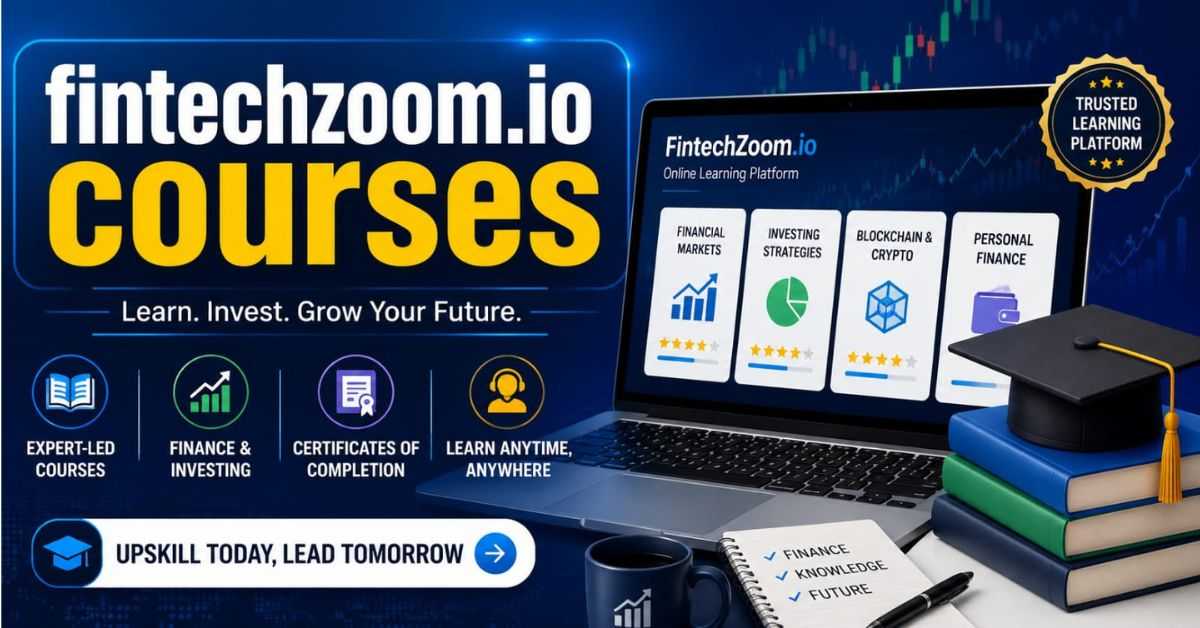
Fintechzoom.io courses are part of this shift. They take complex money topics — like stock trading, budgeting, and portfolio building — and turn them into short, easy-to-follow lessons anyone can study at their own pace. Whether you are a student trying to understand your first paycheck, a young professional wanting to invest wisely, or someone tired of feeling lost when the news talks about markets, this kind of structured learning can help.
In this guide, we will look at what these courses cover, who they are built for, how they compare with traditional finance classes, and what to know before signing up in 2026. We will keep things simple and useful, so you can decide if this learning path fits your goals.
What Do These Programs Actually Teach?
This kind of platform offers online lessons focused on personal finance, investing, and stock market education, built for people who want practical money skills without sitting through long, boring textbooks. Instead of pure theory, the lessons mix real examples, charts, and step-by-step explanations so beginners do not feel overwhelmed.
The lessons generally sit under a few broad categories: financial literacy, stock market trading, portfolio building, and topics like dividend or ESG (environmental, social, and governance) investing. Each category is broken into smaller modules, so learners are not forced to study everything at once and can pick the topic that matches where they are right now.
What makes this approach appealing is the focus on modern, real-world tools rather than only definitions. Learners see how charts work, how portfolios are built, and how risk is managed using examples that reflect today’s markets — through short lessons and hands-on practice rather than long lectures.
Of course, no course can replace professional financial advice for major decisions like retirement planning or large investments. Think of this kind of education as a starting point: a way to build confidence before you make bigger financial moves, ideally alongside guidance from a licensed advisor when the stakes are high.
Why Online Financial Education Matters in 2026
Financial mistakes are expensive, and most come from simply not knowing better. Surveys show adults in the United States answer fewer than half of basic financial literacy questions correctly, and many high schoolers still graduate without ever taking a personal finance class. That gap follows people into adulthood as credit card debt, missed savings goals, or fear of investing altogether.
Online learning has stepped in to fill this gap. Instead of waiting for schools to update their programs, people are turning to flexible, self-paced platforms that teach money skills on their own schedule. This makes sense in 2026, when mobile banking, digital payments, and app-based investing are part of daily life for almost everyone.
There is also a trust factor at play. Many young adults say they learn about money mostly from social media, where advice is often unverified and sometimes harmful. Structured courses, by contrast, are built around clear lesson plans and a logical order — from basic concepts to more advanced strategies — which helps learners avoid a costly trial-and-error approach.
Government resources like the U.S. Securities and Exchange Commission’s investor education site also stress the importance of learning before investing, not after making mistakes. Combining official guidance with practical, everyday lessons is one of the smartest ways to build lasting financial confidence.
Who Can Benefit From These Programs
You do not need a finance degree or a background in economics to start learning online. Most platforms, including fintechzoom.io courses, are designed with beginners in mind, which means the lessons usually start from the ground up before moving into anything advanced.
Here are a few groups who tend to benefit the most:
- Students and young adults who want to understand budgeting, saving, and basic investing before earning a full income.
- New investors who feel nervous about the stock market and want a low-pressure way to learn terms like diversification and risk tolerance.
- Working professionals who earn money but never learned how to manage it well, especially around debt or building a portfolio.
- Small business owners who want a clearer picture of cash flow and how market trends might affect their business.
- Parents who want to teach their kids healthy money habits using simple, age-appropriate lessons.
The common thread is a desire for clarity. Nobody wants to feel embarrassed for not understanding a financial term, and structured lessons remove that pressure — you can pause, repeat, or skip ahead depending on what you already know.
These courses work best as a supplement to good habits, not a replacement for them. Reading a lesson on saving money will not build wealth by itself — you still need to apply it, but having a clear roadmap makes it far easier to start.
Explore FintechZoom.io courses for finance learning and find Contacts Address Seattlesportsonline with useful insights.
Course Structure: What You Will Actually Learn
A good online finance program should feel like a ladder, not a maze — moving from simple ideas to more advanced ones without getting lost. Below is a general breakdown of how a typical structured program in this space is organized.
Table 1: Typical Course Modules and Time Commitment
| Module | Main Topics Covered | Estimated Time |
| Financial Literacy Basics | Budgeting, saving, understanding income and expenses | 3–4 hours |
| Introduction to Investing | Stocks, bonds, ETFs, and basic asset allocation | 4 hours |
| Building a Diversified Portfolio | Risk management, spreading investments, rebalancing | 4–5 hours |
| Stock Market Trading | Reading charts, market orders, technical analysis basics | 4–6 hours |
| Dividend and Income Investing | Passive income strategies, evaluating dividend stocks | 3 hours |
| ESG and Sustainable Investing | Green bonds, socially responsible investing | 3–4 hours |
This layout lets a beginner start with Module 1 and gradually build real skills, instead of jumping straight into complicated strategies. Most programs also include short quizzes, downloadable templates, and sometimes a certificate at the end.
The value is not in memorizing definitions. It is in applying concepts — actually creating a simple budget, or practicing how to read a stock chart using a demo account before risking real money. That hands-on approach separates useful financial education from a stack of unused slides.
Key Features That Make Learning Simple
The best online finance programs share a few common features that make them approachable for people with no prior background.
Bite-sized lessons. Instead of one long video, most modules are broken into short segments, usually 10–20 minutes each, so learning fits into a lunch break or commute.
Visual tools. Charts, graphs, and simple diagrams help explain ideas like compound interest or portfolio diversification far better than plain text alone.
Real or simulated data. Many programs use historical or live market data so learners can practice with numbers that reflect real conditions, without risking actual money.
Progress tracking. A dashboard or checklist that shows how far along you are keeps motivation high for self-paced learners.
Community or support access. Some platforms include discussion boards or email support, so learners are not left alone when a concept does not click the first time.
When these features come together well, fintechzoom.io courses and similar programs manage to make dense financial topics feel manageable, even for someone who has never opened a brokerage account. The goal is always the same: reduce confusion, build confidence, and turn financial jargon into everyday language.
Comparing Learning Paths: Traditional vs. Online
It helps to see how self-paced online learning stacks up against more traditional ways of studying finance. Neither approach is automatically better — it depends on your schedule, budget, and learning style.
Table 2: Traditional Classes vs. Self-Paced Online Courses
| Feature | Traditional Classroom | Self-Paced Online Courses |
| Schedule | Fixed class times | Learn anytime, anywhere |
| Cost | Often higher (tuition, materials) | Usually lower or flexible pricing |
| Pace | Set by the instructor | Set by the learner |
| Interaction | Face-to-face discussion | Forums, chat, or email support |
| Content updates | Slower to change | Can be updated quickly |
| Best for | Structured, accountability-driven learners | Busy adults, self-motivated learners |
As the table shows, the biggest advantage of a program like fintechzoom.io courses is flexibility. You are not tied to a semester schedule or a physical classroom, which matters if you have a job or family responsibilities. On the other hand, if you thrive on live discussion and instant feedback, a traditional class might still suit you better for certain topics.
Many learners combine both — using free government resources for foundational knowledge and structured online courses for applied, hands-on skills like reading charts or building a sample portfolio.
Skills You Can Apply in Real Life
Learning finance only matters if it changes what you actually do with your money. Here are practical skills that a well-designed course should help you build, step by step:
- Creating a working budget. Understanding where your money goes each month is the foundation of every other financial decision.
- Reading a stock chart. Recognizing basic patterns and price movements helps you avoid panic-driven decisions.
- Understanding diversification. Spreading your money across different assets reduces the risk of losing everything in one bad investment.
- Evaluating dividend stocks. Learning how to check payout history and stability before choosing income-focused investments.
- Setting realistic goals. Turning vague wishes like “I want to save more” into specific, measurable targets, such as saving fifty dollars a month.
- Practicing with a demo account. Testing strategies without real money builds confidence before you commit actual funds.
These are not abstract ideas — they are habits you can start the same week you learn them. Tracking one stock’s performance for a month, or setting up an automatic monthly transfer into savings, are small actions that build real financial discipline over time.
Pricing, Access, and Time Commitment
Cost and time are usually the two biggest questions people have before signing up for any online learning platform. While specific pricing can change, most self-paced finance programs, including fintechzoom.io courses, follow a similar general pattern worth knowing about.
Pricing models typically fall into a few categories: free introductory lessons to test the platform, one-time payments for individual modules, or subscription access that unlocks the full library. Free previews are common because they let learners sample the teaching style before spending money.
Time commitment varies by module but is usually designed around busy schedules. A single module might take three to six hours total, spread across a few weeks rather than all at once — one reason online learning has become so popular compared with fixed-schedule classes.
Certificates, where offered, can be a nice bonus for a resume, though a certificate mainly shows you completed the material — it does not replace professional licensing needed for careers in financial advising or trading.
Before paying for any course, check the refund policy, read independent reviews, and confirm what’s included, such as templates or lifetime versus limited-time access.
Tips to Get the Most Out of Your Learning
Signing up for a course is only the first step. Getting real value from it depends on how you use the material afterward. Here are practical tips to make the experience worthwhile:
- Set a weekly goal, even if it is just one lesson per week. Consistency beats cramming everything into one weekend.
- Take notes in your own words. Rewriting a concept, like how compound interest works, helps it stick far better than just watching a video.
- Practice immediately. If a lesson teaches budgeting, build your actual budget that same day instead of waiting.
- Use demo accounts before real trading. Testing strategies with fake money removes the fear of losing real cash while you are still learning.
- Revisit tricky topics. Concepts like technical analysis or asset allocation often make more sense the second time around, once you have more context.
- Cross-check with trusted sources. Compare what you learn with official resources, such as government financial literacy sites, to confirm you are getting accurate information.
It also helps to treat learning as an ongoing habit rather than a one-time event. Markets change, and personal circumstances shift as you get older or start a family. Revisiting your financial education every year or two keeps your knowledge current.
Common Mistakes Beginners Make (and How to Avoid Them)
Even with good lessons available, many beginners stumble in the same predictable ways.
Skipping the basics. Jumping straight to advanced trading strategies without understanding budgeting or risk first usually backfires.
Investing real money too early. Excitement after finishing a module can lead to impulsive investing before practicing with a demo account.
Ignoring risk tolerance. A course can teach the concept, but you still need to honestly assess how much risk you can handle, based on your age, income, and goals.
Chasing trends instead of strategy. Social media often pushes hype around certain stocks or coins. Structured education counters that impulse by teaching patience and long-term thinking.
Never applying what you learn. The biggest mistake is treating a course like entertainment — watching lessons without ever creating a budget or tracking a real stock.
Avoiding these mistakes is less about intelligence and more about discipline. A well-structured course gives you the map, but you still have to walk the path yourself.
Frequently Asked Questions (FAQs)
Are fintechzoom.io courses free?
Some introductory lessons are typically free, while more advanced modules may require a one-time payment or subscription.
Do I get a certificate after finishing a course?
Many programs offer a completion certificate, though it mainly shows effort and is not a professional license.
Are these courses beginner-friendly?
Yes, most modules are built to start from the basics, such as budgeting, before moving into stock market topics.
How much time do I need each week?
Around one to three hours per week is usually enough, since lessons are broken into short, manageable sections.
Do I need real money to start learning?
No, most programs recommend practicing with a demo account first, so you can learn safely before investing real funds.
Conclusion
Learning about money does not have to feel intimidating or out of reach. With clear, self-paced lessons, practical examples, and simple explanations, fintechzoom.io courses and similar platforms are helping everyday people — students, professionals, and parents alike — turn confusing financial jargon into skills they can actually use. The real value comes not from watching lessons passively, but from applying them: building a real budget, practicing with a demo account, and slowly growing your confidence with money.
If you have been putting off learning how to invest, save smarter, or understand the stock market, there is no better time to start than now. Pick one topic that feels most useful to your life today, whether that is budgeting or understanding your first stock purchase, and commit to learning it properly. Small, consistent steps in financial education tend to pay off far more than waiting for the “perfect” time to begin.
For more foundational reading, check out our guide to budgeting for beginners and our breakdown of stock market basics to build a strong base before diving deeper into investing strategies.